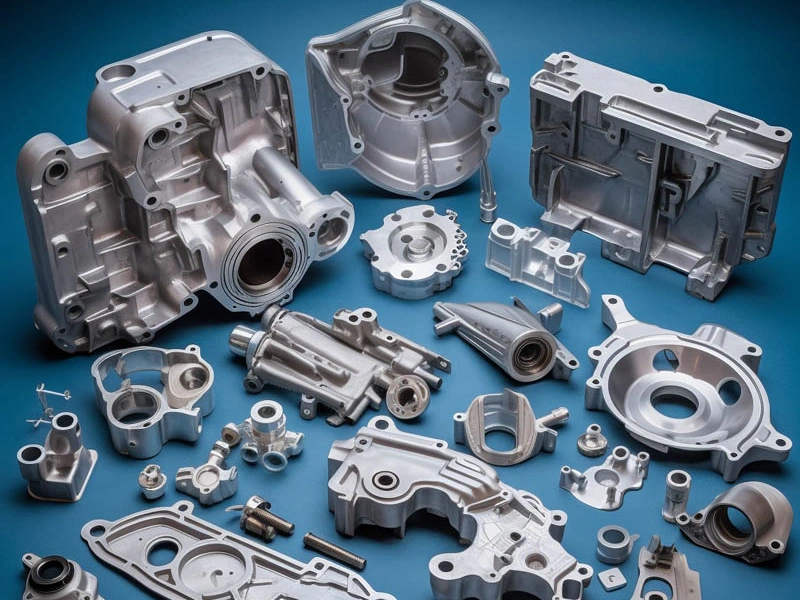
Hardware — encompassing fasteners, hinges, brackets, bolts, rivets, and thousands of metal components — forms the invisible backbone of the modern world. From the tallest skyscrapers to the smallest circuit boards, hardware products enable structures to stand, machines to move, and products to hold together. Understanding the diverse applications of hardware is essential for engineers, architects, procurement managers, and manufacturers seeking the right component for every job.
Construction & Building Hardware
Construction hardware is the connective tissue of every building project. Structural fasteners, anchoring systems, door and window fittings, and safety hardware must meet load ratings, fire classifications, and corrosion resistance standards that vary by building type, climate zone, and occupancy category.
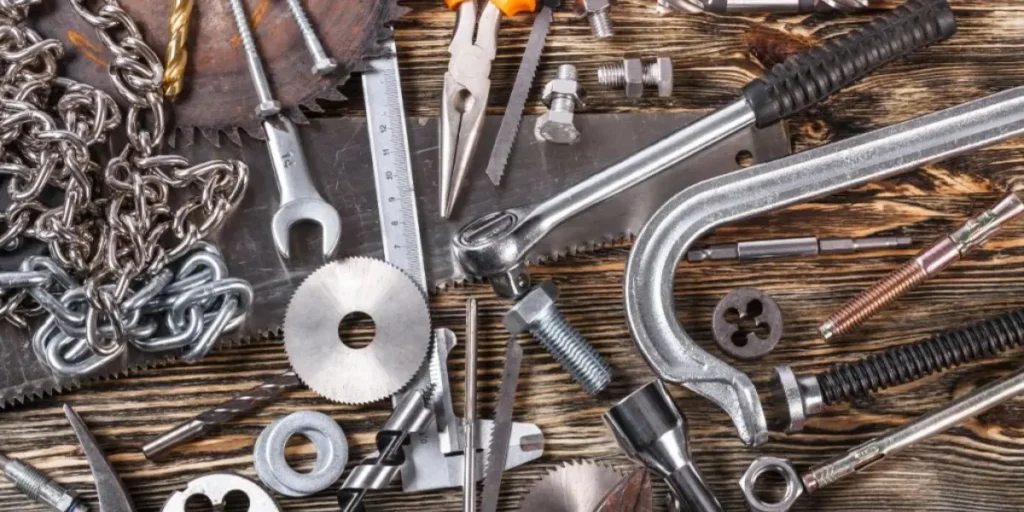
Core hardware categories — construction & building
| Hardware Type | Typical Application | Common Material | Key Standard |
|---|---|---|---|
| Anchor Bolts | Column base plates, hold-downs | Zinc-plated carbon steel | ASTM F1554 |
| Joist Hangers | Timber floor & roof framing | Hot-dip galvanized steel | ICC-ES ESR |
| Expansion Anchors | Masonry & concrete fixing | Stainless 316 / carbon | ETAG 001 |
| Chemical Anchors | High-load concrete fixing | Stainless / carbon + resin | ETA / ICC-ES |
| Butt Hinges | Fire-rated & standard doors | Stainless 304 / brass | EN 1935 |
| Door Closers | Commercial & fire doors | Cast aluminium body | EN 1154 |
| Balustrade Fittings | Handrail & glass balustrades | Stainless 316L | EN 1090 |
| Roofing Clips | Purlin & ridge connections | Hot-dip galvanized | AS 1397 |
Corrosion resistance is the primary material driver in exterior and wet-area construction hardware. Specifying the wrong grade in a coastal or chemical environment leads to premature failure. The table below maps exposure class to the recommended material grade.
Exposure class vs. material selection
| Exposure Class | Recommended Material |
|---|---|
| Interior dry | Zinc-plated carbon steel |
| Interior wet | Stainless 304 / hot-dip galv. |
| Exterior urban | Hot-dip galvanized |
| Coastal / marine | Stainless 316L |
| Chemical / pool | Duplex 2205 |
Door hinge grades — EN 1935
| Grade | Max Door Weight | Cycle Life |
|---|---|---|
| Grade 7 | Up to 120 kg | 200,000 cycles |
| Grade 11 | Up to 160 kg | 500,000 cycles |
| Grade 13 | Up to 200 kg | 1,000,000 cycles |
Application 02
Automotive & Transportation Hardware
Automotive hardware must endure extreme temperature cycles, constant vibration, and road chemicals over a vehicle’s full service life. Every fastener is engineered to tight tolerances and must meet ISO property class specifications defining minimum yield strength, proof load, and hardness.
Bolt property classes — ISO 898-1
| Property Class | Min. Tensile Strength | Min. Yield Strength | Typical Application |
|---|---|---|---|
| 4.8 | 420 MPa | 340 MPa | Low-load trim & body panels |
| 8.8 | 800 MPa | 640 MPa | General drivetrain, brackets |
| 10.9 | 1,040 MPa | 940 MPa | Cylinder heads, connecting rods |
| 12.9 | 1,220 MPa | 1,100 MPa | High-performance racing engines |
Hardware requirements by vehicle assembly zone
| Assembly Zone | Key Hardware | Special Requirement |
|---|---|---|
| Engine block | Torque-to-yield head bolts, main cap studs | Single-use; thermal fatigue rated |
| Exhaust system | Manifold studs, flange bolts | High-temp alloy ≥ 800 °C |
| Suspension | Prevailing torque lock nuts, clevis pins | Vibration-proof (nylon insert / all-metal) |
| Wheel hub | Wheel bolts / nuts (M12–M14) | Conical seat for centering; torqued to spec |
| Body & trim | Clip nuts, push-in rivets, panel screws | Corrosion-resistant zinc coat |
| EV battery pack | Captive flange bolts, isolation washers | Anti-galvanic; EV insulation rated |
Vibration locking mechanisms
| Lock Type | Best For |
|---|---|
| Nylon insert nut | Low-temp vibration zones |
| All-metal prevailing torque | High-temp exhaust & engine |
| Thread-locking adhesive | Precision small fasteners |
| Serrated flange bolt | Sheet metal, body assembly |
Lightweighting material options
| Material | Weight vs. Steel | Trade-off |
|---|---|---|
| Titanium Grade 5 | −43 % | Higher cost |
| Aluminium 7075 | −65 % | Lower fatigue limit |
| Magnesium alloy | −75 % | Poor corrosion resistance |
Application 03
Furniture & Cabinetry Hardware
Furniture hardware sits at the intersection of mechanical function and visual design. Finish quality, cycle life, and dimensional precision all affect the perceived quality of the end product — from a budget flat-pack shelf to a bespoke kitchen. The tables below capture the most critical hardware families in this sector.
Cabinet hinge types & specifications
| Hinge Type | Opening Angle | Max Door Weight | Application |
|---|---|---|---|
| Standard cup hinge (110°) | 110° | 20 kg | Standard kitchen & wardrobe doors |
| Wide-angle hinge (165°) | 165° | 20 kg | Corner & accessible cabinetry |
| Heavy-duty cup hinge | 110° | 40 kg | Thick solid-wood & glass doors |
| Inset hinge | 95° | 15 kg | Face-frame cabinetry, traditional style |
| Clip-on soft-close | 110° | 20 kg | Premium kitchens, bathroom vanities |
| Glass door hinge | 180° | 8 kg | Display cabinets, glass-front units |
Drawer slide comparison
| Slide Type | Extension | Visibility | Load |
|---|---|---|---|
| Side-mount ball-bearing | Full | Visible | 35–45 kg |
| Undermount soft-close | Full | Hidden | 40–70 kg |
| Push-to-open undermount | Full | Hidden | 30 kg |
| Wooden runner | Partial | Visible | 10 kg |
Flat-pack assembly connectors
| Connector | Function | Tool |
|---|---|---|
| Cam lock (RTA bolt) | Panel-to-panel joint | Screwdriver |
| Confirmat screw | Edge-to-face joining | Hex key |
| Barrel nut + bolt | Cross-panel tensioning | Hex key |
| Dowel pin | Alignment & shear | Mallet |
Handle & knob finish guide
| Finish | Base Material | Style Context | Maintenance |
|---|---|---|---|
| Brushed satin nickel | Zamak / SS | Contemporary, Scandinavian | Wipe clean |
| Polished chrome | Brass / zinc | Modern, minimalist | Fingerprint-prone |
| Antique brass | Brass | Traditional, rustic, Shaker | Patina develops |
| Matte black | Zamak / SS | Industrial, modern farmhouse | Scratch-resistant coat |
| Unlacquered brass | Solid brass | Transitional, luxury | Living patina |
Application 04
Electronics & Precision Hardware
Electronics hardware operates at millimetre or sub-millimetre scale, yet its role is no less critical than a structural bolt. Standoffs isolate circuit boards from chassis, miniature screws secure heat-sinks, and shielding hardware suppresses electromagnetic interference. Material selection must account for magnetic properties, conductivity, and outgassing in sensitive environments.
Miniature machine screw size guide
| Thread Size | Typical Torque | Common Material | Typical Use |
|---|---|---|---|
| M1.6 | 0.05–0.08 N·m | Stainless 304 | Micro-camera, wearable modules |
| M2 | 0.08–0.12 N·m | Stainless / brass | Laptop chassis, PCB hold-downs |
| M2.5 | 0.15–0.20 N·m | Stainless / brass | SSD, optical drive mounting |
| M3 | 0.25–0.40 N·m | Stainless / nylon | Fan brackets, heat-sink retention |
| M4 | 0.80–1.20 N·m | Stainless / zinc | PSU, case panel fastening |
| UNC #6-32 | 0.40–0.55 N·m | Carbon steel | 19-inch rack equipment |
Standoff types & uses
| Standoff Type | Use Case |
|---|---|
| Hex male-female | PCB stacking, chassis mounting |
| Round snap-in | Tool-less PCB installation |
| Nylon unthreaded | Full electrical isolation |
| Threaded brass insert | Plastic enclosure reinforcement |
Material vs. magnetic property
| Material | Magnetic? | Best For |
|---|---|---|
| Stainless 304 | Slightly | General electronics |
| Brass | No | RF / sensor proximity |
| Nylon | No | Full electrical isolation |
| Titanium Grade 2 | No | MRI-compatible devices |
Enclosure ingress protection (IP rating) — hardware requirements
| IP Rating | Protection Level | Required Hardware Features | Typical Product |
|---|---|---|---|
| IP54 | Dust & splash resistant | Gasket-seated lid screws | Indoor industrial control panel |
| IP65 | Dust-tight, water jets | Captive M4 stainless, EPDM gasket | Outdoor access point enclosure |
| IP67 | Immersion to 1 m / 30 min | Stainless 316, NBR O-ring seals | Marine instrument housing |
| IP68 | Continuous submersion | 316L + silicone seals + torque spec | Underwater camera, dive equipment |
Application 05
Marine & Offshore Hardware
Salt spray, tidal immersion, biofouling, UV radiation, and cyclic wave loading make marine environments among the most demanding for hardware. Ordinary carbon steel hardware can fail within months offshore, making alloy selection and galvanic isolation the defining challenges of marine hardware specification.
Marine hardware material selection guide
| Material | Corrosion Resistance | Strength | Best Application Zone |
|---|---|---|---|
| 316L Stainless | Excellent | Medium–High | Deck, rigging, above waterline |
| Duplex 2205 SS | Superior | Very High | Splash zone, offshore structural |
| Naval Brass (CuZn40) | Very Good | Medium | Through-hull fittings, sea cocks |
| Silicon Bronze | Excellent | Medium | Traditional wooden boat fasteners |
| Nitronic 50 (XM-19) | Superior | Very High | Racing yacht rigging, critical joins |
| Hot-dip galv. steel | Good | High | Anchor chain, mooring hardware |
| Aluminium 5083 | Good | Medium | Lightweight deck fittings, masts |
Rigging hardware — key components
| Component | Function | WLL Note |
|---|---|---|
| Turnbuckle | Standing rigging tension | Proof-loaded ×2 |
| Clevis pin | Forestay / backstay terminal | Cotter pin secured |
| Swage fitting | Wire rope terminal | Fatigue-rated |
| Bow shackle | Block & anchor connections | Moused or locked pin |
| Toggle jaw | Chainplate articulation | 316 / Nitronic 50 |
Galvanic series — risk in seawater
| Metal Pair | Galvanic Risk | Mitigation |
|---|---|---|
| Stainless + aluminium | High | PTFE washer isolation |
| Brass + stainless | Low–Medium | Compatible; monitor |
| Carbon steel + bronze | High | Avoid or coat steel |
| Aluminium + bronze | Very High | Always isolate |
Application 06
Industrial & Heavy Machinery Hardware
Industrial and heavy machinery applications push hardware to its absolute limits. Mining equipment, chemical processing plants, cement mills, and power generation facilities operate continuously under high loads and aggressive conditions. Hardware failure can mean costly downtime, safety incidents, or catastrophic equipment damage — making quality assurance and material traceability non-negotiable.
Structural bolt specifications — heavy industry
| Specification | Standard | Tensile Strength | Typical Use |
|---|---|---|---|
| Heavy Hex Bolt A325 | ASTM A325 | 830 MPa min. | Structural steel framing |
| Heavy Hex Bolt A490 | ASTM A490 | 1,040 MPa min. | High-load steel connections |
| Tension-Control Bolt | ASTM F3125 / F1852 | 830–1,040 MPa | Calibrated structural joints |
| Stud Bolt B7 / 2H Nut | ASTM A193-B7 | 1,000 MPa min. | Pressure vessel & pipe flanges |
| Stainless Stud B8M | ASTM A193-B8M | 690 MPa min. | Chemical process flanges |
| Inconel 625 Stud | ASTM B446 | 760 MPa min. | High-temp / acid service |
Pipe flange bolt torque sequence
| Pass | % of Final Torque | Pattern |
|---|---|---|
| 1st pass | 30 % | Star / cross |
| 2nd pass | 70 % | Star / cross |
| 3rd pass | 100 % | Star / cross |
| Final pass | 100 % | Clockwise circle |
ATEX zone hardware requirements
| ATEX Zone | Risk Level | Hardware Requirement |
|---|---|---|
| Zone 0 | Continuous gas | Non-sparking alloys only |
| Zone 1 | Intermittent gas | ATEX-certified; EEx rated |
| Zone 2 | Rare gas | Anti-spark coating permitted |
| Zone 21/22 | Dust atmosphere | IP6X sealed, earthed |
Lifting & rigging hardware — certification overview
| Component | Material | Standard | Safety Factor | Inspection Interval |
|---|---|---|---|---|
| Bow shackle | Grade 6 alloy steel | EN 13889 | 4:1 (WLL) | Annual + after overload |
| Eyebolt (swivel) | Alloy steel | EN 1677-1 | 4:1 | Every 12 months |
| Wire rope clip | Forged carbon steel | EN 13411-5 | 5:1 (on rope) | After first load cycle |
| Turnbuckle (lifting) | Grade 6 alloy steel | EN 1677-6 | 4:1 | Before each use |
| Certified eyenut | Alloy steel, WLL-marked | BS 4278 | 4:1 | Annual visual + NDT |
Hardware: The Foundation of Every Industry
From the structural bolts holding together a steel-framed factory, to the miniature screws inside a smartphone’s camera module, metal hardware is the common denominator of manufacturing and construction across every sector. Selecting the right hardware — with the correct material grade, surface finish, strength class, and corrosion resistance — directly determines product quality, safety margins, and long-term reliability.
As industries evolve through electrification, lightweighting, offshore energy expansion, and smart manufacturing, hardware technology evolves with them — delivering ever more specialized, traceable, and performance-engineered components for the world’s most demanding applications.