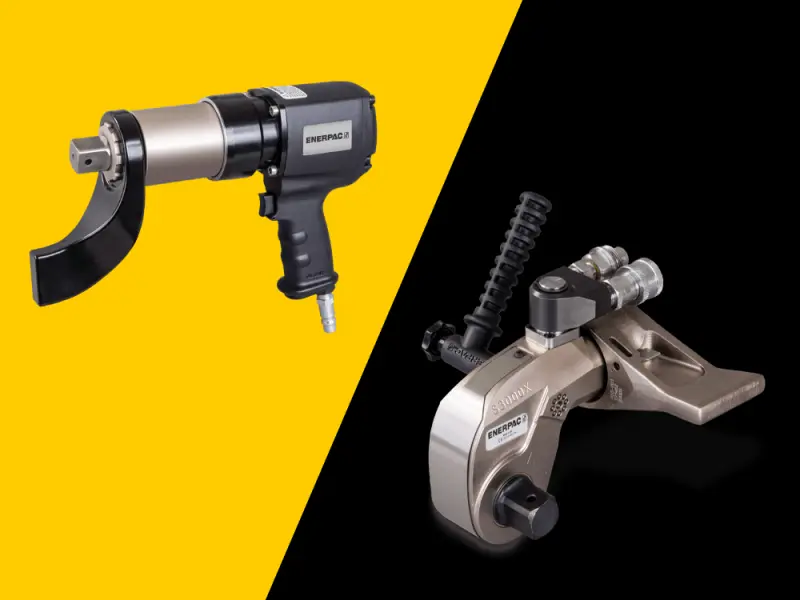
Hydraulic tools are powered by pressurized liquid, usually a special type of oil. These tools follow Pascal’s Law: pressure applied to a liquid is transmitted equally in all directions.
Because liquid cannot be compressed, these tools are extremely powerful. They are used for tasks that require massive force, such as lifting a bridge or cutting through thick steel.
Common Examples of Hydraulic Tools:
- Hydraulic Jacks: Used for lifting heavy vehicles or buildings.
- Hydraulic Crimpers: Used to join heavy electrical cables.
- Hydraulic Cutters: Often used by rescue teams to cut through car frames.
- Hydraulic Torque Wrenches: Used to tighten very large bolts in power plants.
What are Pneumatic Tools?
Pneumatic tools, also known as air tools, are powered by compressed air. An air compressor squeezes the air, and this energy is sent through a hose to the tool.
Air is easy to compress and move. This makes pneumatic tools much lighter and faster than hydraulic or electric tools. They are the standard choice for automotive repair shops and assembly lines.
Common Examples of Pneumatic Tools:
- Air Impact Wrenches: Used to remove lug nuts from car tires quickly.
- Pneumatic Drills: High-speed drilling in metal or wood.
- Air Nail Guns: Used in construction to drive nails into wood instantly.
- Pneumatic Sanders: Used for smoothing surfaces in paint shops.
Hydraulic vs. Pneumatic: The Main Differences
| Feature | Hydraulic Tools | Pneumatic Tools |
|---|---|---|
| Power Source | Pressurized Oil | Compressed Air |
| Force Level | Extremely High | Medium to High |
| Speed | Slower Movement | Very Fast Movement |
| Weight of Tool | Heavy | Lightweight |
| Precision | Very High | Medium |
| Leaking Risk | Messy (Oil leaks) | Safe (Air leaks) |
| Maintenance | High (Filter/Oil changes) | Low (Regular oiling) |
Digitized Specifications of Common Tools
Our factory follows strict standards for pressure and flow. Below are the digitized specifications for our top-selling models.
| Tool Category | Model Code | Operating Pressure | Max Output / Flow | Tool Weight |
|---|---|---|---|---|
| Hydraulic Jack | HJ−20 | 700 bar | 20 Tons | 12 kg |
| Hydraulic Crimper | HC−300 | 60 kN | 16−300 mm2 | 6.5 kg |
| Air Impact Wrench | PW−1/2 | 6.3 bar(90 PSI) | 600 Nm | 2.1 kg |
| Air Nail Gun | ANG−50 | 5−8 bar | 100 Nails/min | 1.5 kg |
| Hydraulic Pump | HP−700 | 700 bar | 0.9 L/min | 25 kg |
Materials Used in Tool Construction
To handle high pressure, hydraulic and pneumatic tools must be made from the strongest materials. Our factory uses:
- High-Tensile Steel: Used for the bodies of hydraulic jacks and cylinders to prevent bursting under pressure.
- Aluminum Alloy: Used for pneumatic tool housings to keep them lightweight for the user.
- Chrome Vanadium Steel (Cr−V): Used for the internal gears and sockets that take the most impact.
- Reinforced Rubber/Polyurethane: Used for the high-pressure hoses that carry the oil or air.
Application Areas
These tools are essential in many professional fields:
- Automotive Repair: Air wrenches and hydraulic lifts are in every garage.
- Construction: Hydraulic excavators and pneumatic nailers build modern homes.
- Mining: Heavy-duty hydraulic drills break through solid rock.
- Manufacturing: Pneumatic robotic arms assemble electronics and cars.
- Aerospace: Precision pneumatic tools are used to rivet airplane wings.
- Emergency Services: “Jaws of Life” are hydraulic tools used to save people after car accidents.
Why Buy From Our Factory?
We understand that industrial hardware must be reliable. A tool failure can stop a whole project.
1. High-Pressure Testing
Every hydraulic tool we make is tested at 120% of its rated capacity. If a tool is rated for 700 bar, we test it to ensure it can handle more for safety.
2. Ergonomic Design
We focus on the user. Our pneumatic tools feature vibration-damping handles. This reduces fatigue for workers who use the tools all day.
3. Customization (OEM)
We can adjust the pressure ratings or provide custom fittings for your specific machinery. We offer digitized manufacturing to ensure every part is identical.
4. Global Standards
Our tools meet international safety certifications. We use high-grade seals from top suppliers to prevent oil or air leaks.
Maintenance Tips for Long Life
To keep your hydraulic and pneumatic tools working perfectly, follow these simple rules:
For Hydraulic Tools:
- Check the Oil: Always use the correct grade of hydraulic oil.
- Keep it Clean: Dirt is the number one enemy of hydraulic seals. Wipe the connectors before plugging them in.
- Bleed the Air: If the tool feels “spongy,” there might be air in the oil line. Bleed the system regularly.
For Pneumatic Tools:
- Daily Oiling: Add a few drops of air-tool oil into the air inlet every day.
- Drain the Compressor: Water builds up in air tanks. Drain the water daily to prevent rust inside your tools.
- Watch the Pressure: Never exceed the recommended PSI (usually 90 PSI). Too much pressure will break the internal parts.
Frequently Asked Questions (FAQ)
1. Which is better, hydraulic or pneumatic?
It depends on the job. If you need huge power (like lifting a truck), choose hydraulic. If you need speed and light weight (like changing tires), choose pneumatic.
2. Can I use water in my hydraulic tools?
No. Hydraulic tools require oil. Oil lubricates the parts and prevents rust. Water would destroy the pump and the internal components.
3. Why is my pneumatic tool losing power?
This is usually caused by an air leak in the hose or a dirty air filter in the compressor. Also, check if you are using a hose that is too long or too thin.
4. Are hydraulic tools dangerous?
They are safe if used correctly. However, because the pressure is very high (700 bar or more), you must check the hoses for cracks regularly.