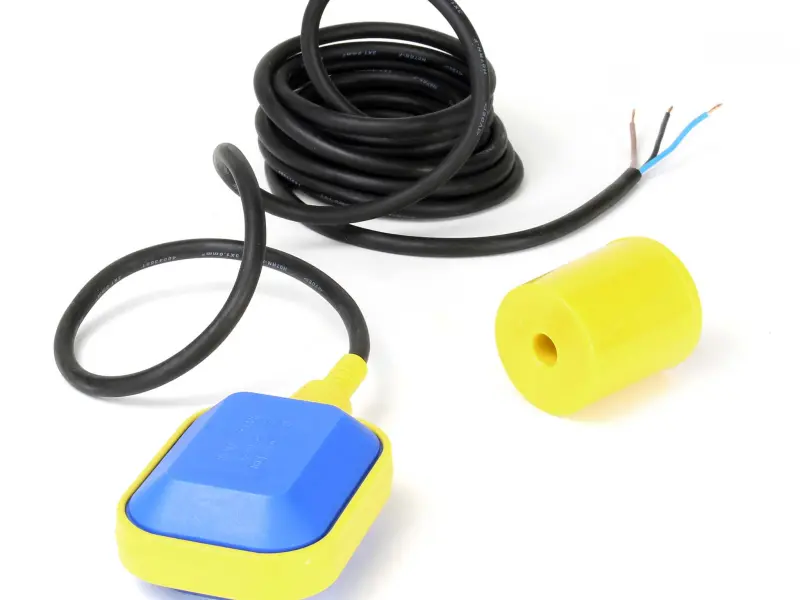
A mechanical float switch is a simple but very important device. It is used to detect the level of liquid within a tank or container. Based on the water level, it can automatically turn a pump on or off. This prevents tanks from overflowing or pumps from running dry.
Our factory specializes in high-quality mechanical float switches. We produce durable sensors for water, sewage, and industrial chemicals. If you need a reliable way to control your liquid levels, our factory-direct solutions are the best choice.
What is a Mechanical Float Switch?
A mechanical float switch is a type of liquid level sensor. It uses a floating body (the float) that moves up and down with the liquid. Inside the float, there is a mechanical switch or a metal ball.
When the liquid reaches a certain height, the float tilts. This movement causes the internal switch to open or close an electrical circuit. It is “mechanical” because it relies on physical movement rather than electronic beams or ultrasonic waves.
How Does a Mechanical Float Switch Work?
The working principle is very easy to understand:
- Low Level: When the tank is empty, the float hangs down. The internal switch is in its “off” (or “on”) position.
- Rising Level: As the tank fills with water, the float rises.
- Trigger Point: When the float reaches a specific angle (usually 45 degrees), the internal ball rolls and hits a microswitch.
- Action: This sends a signal to your pump or alarm system to start or stop.
Types of Mechanical Float Switches
Our factory produces several different models. Each is designed for a specific environment.
1. Cable Float Switch (Sewage Type)
This is the most common type. It consists of a large plastic float attached to a long flexible cable.
- Best For: Sewage water, septic tanks, and large water reservoirs.
- Feature: It can handle thick liquids and solids without getting stuck.
2. Vertical Float Switch
These move up and down a fixed rod rather than tilting on a cable.
- Best For: Small tanks or narrow spaces where a cable cannot swing.
- Feature: Very precise and takes up very little room.
3. Stainless Steel Float Switch
These are made from high-grade metal instead of plastic.
- Best For: High-temperature liquids or food-grade applications.
- Feature: Resists corrosion and can handle temperatures up to 120∘C.
4. Side-Mounted Float Switch
These are installed through a hole in the side of a tank.
- Best For: Fuel tanks or chemical containers.
- Feature: Very easy to install in existing tanks.
Technical Specifications Table
To help you choose the right mechanical float switch, we have listed our standard digitized types below.
| Model Number | Material | Max Voltage | Max Current | Cable Length | Operating Temp |
|---|---|---|---|---|---|
| FS−1 Standard | PP Plastic | 250V | 10(8)A | 2m−10m | 0∘C to 60∘C |
| FS−2 Heavy Duty | PP Plastic | 250V | 16(4)A | 3m−20m | 0∘C to 70∘C |
| SS−80 High Temp | Stainless 304 | 220V | 1.5A | 0.5m (Rod) | −10∘C to 120∘C |
| M15−3 Industrial | Neoprene | 380V | 16A | Custom Length | 0∘C to 80∘C |
| Mini−V Small | PP Plastic | 110V | 0.5A | 0.3m | −10∘C to 85∘C |
Key Materials and Durability
The material of a mechanical float switch determines where it can be used. Our factory uses premium raw materials:
- Polypropylene (PP): This is a lightweight plastic. It is perfect for clean water and most household sewage. It is non-toxic and very affordable.
- Stainless Steel (304 or 316): We use this for industrial chemicals, hot water, and drinking water. It does not rust and is very strong.
- Neoprene or PVC Cables: The cable must be waterproof and flexible. We use multi-strand copper inside the cable to ensure it does not break after years of bending.
Application Areas for Mechanical Float Switches
Where can you use our switches? Here are the most common applications:
- Residential Water Tanks: Automatically refill your roof tank when it gets low.
- Sewage Sump Pumps: Drain waste water from basements or septic systems.
- Cooling Towers: Maintain the water level in industrial cooling systems.
- Agricultural Irrigation: Control the water supply for crops and livestock.
- Water Treatment Plants: Manage the flow of water through filters and basins.
- Boilers: Monitor high-temperature water levels in heating systems.
- Home Appliances: Used inside washing machines and dishwashers.
Why Buy Directly From Our Factory?
When you choose our factory for your mechanical float switch needs, you get several advantages:
Customization (OEM/ODM)
We can change the cable length, the color of the float, or the thickness of the wire. We can also print your company logo on the product.
Strict Quality Control
Every switch is tested in a water tank before it leaves our factory. We check:
- Waterproofing: We ensure the seal is perfect (IP68 rating).
- Electrical Safety: We test the microswitch for millions of cycles.
- Buoyancy: We make sure the float rises at the exact right moment.
Affordable Pricing
By cutting out the middleman, we provide high-quality switches at a much lower cost. This is ideal for wholesalers and large construction projects.
Installation Tips for Your Float Switch
Installing a mechanical float switch is simple, but you must follow these rules:
- Set the Tether: Use a weight or a clip to fix the cable. The distance between the clip and the float determines how much the water level changes before the pump starts.
- Avoid Obstacles: Make sure the float does not get caught on pipes or the wall of the tank.
- Check the Load: Ensure your pump does not draw more current than the switch can handle. If the pump is very large, use a contactor or relay.
- Seal the Connection: Always keep the cable joints outside of the water to prevent short circuits.
Comparison: Cable vs. Vertical Float Switches
| Feature | Cable Type | Vertical Type |
|---|---|---|
| Space Required | High (needs room to swing) | Low (moves straight up) |
| Solid Waste | Handles well | Can get stuck |
| Adjustability | Very easy (change cable length) | Fixed range |
| Precision | Medium | High |
| Maintenance | Almost zero | Needs occasional cleaning |
Frequently Asked Questions (FAQ)
1. What is the difference between “Normally Open” and “Normally Closed”?
- Normally Open (NO): The circuit is off until the float rises. (Used to empty a tank).
- Normally Closed (NC): The circuit is on until the float rises. (Used to fill a tank).
Most of our switches have three wires, so you can choose either mode.
2. Can one float switch control a high-power pump?
A standard mechanical float switch can usually handle up to 10A or 16A. For very large industrial pumps, you should use the switch to trigger an AC contactor.
3. Is the cable waterproof?
Yes. Our cables are rated IP68. This means they can stay under water for many years without leaking.
4. How long do these switches last?
With proper installation, our switches are designed for over 50,000 operations. This usually means a lifespan of 5 to 10 years.