In the world of electricity, we need physical parts to manage power. These parts are called electrical hardware. This hardware allows us to turn lights on, run big machines, and keep our homes safe. Without high-quality electrical hardware, electricity would be dangerous and hard to control.
Defining Electrical Hardware
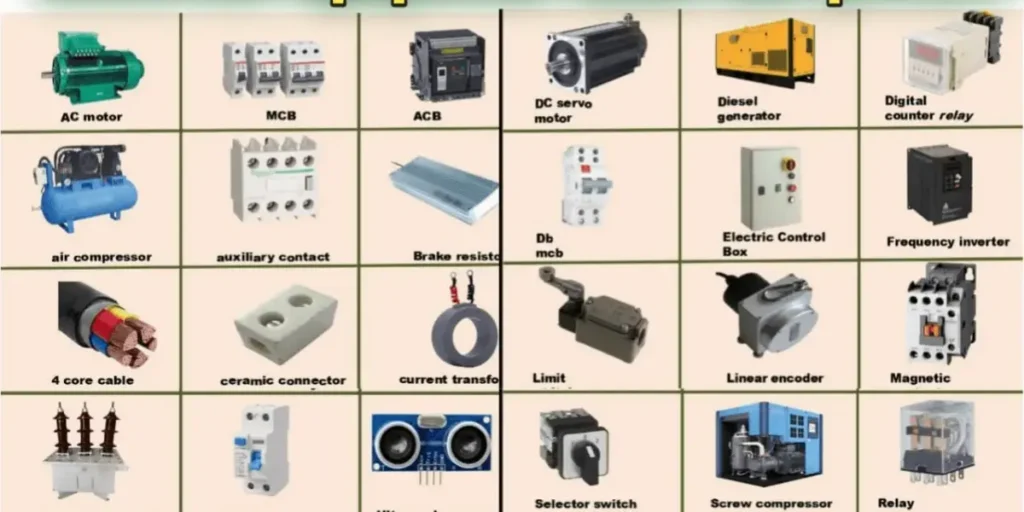
Electrical hardware includes all the physical components used to install, protect, and control an electrical system. It is the bridge between the power source and the machine using the power.
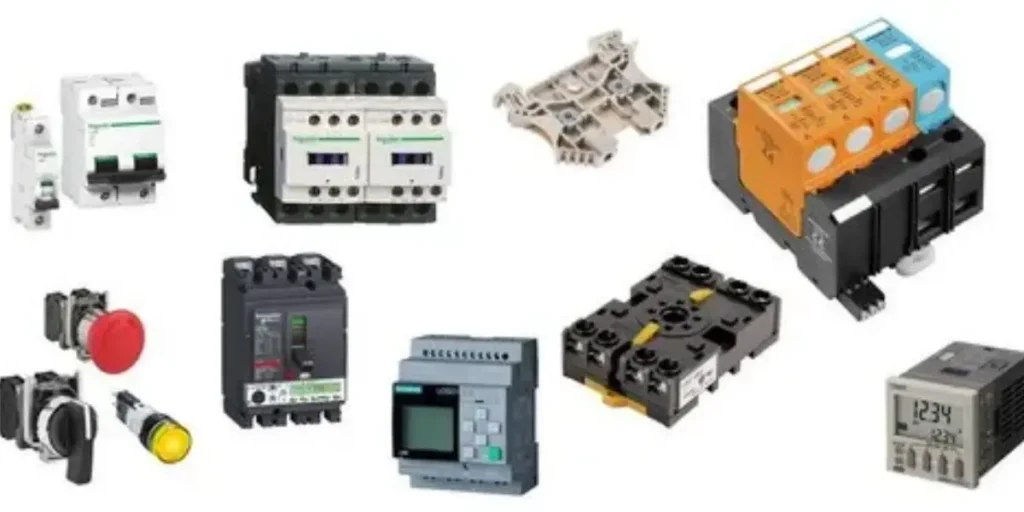
When you look at a wall or an industrial panel, the boxes, switches, and wires you see are all parts of this category. These products are designed to handle specific amounts of voltage (V) and current (I).
| Feature | Description |
|---|---|
| Primary Goal | Safety and Control |
| Common Materials | Copper (Cu), Plastic, Brass, Steel |
| Key Metrics | Voltage (V), Current (A), Frequency (Hz) |
Major Types of Electrical Hardware
There are many different types of hardware. Each one has a specific job. Here are the most common products we provide from our factory.
1. Circuit Breakers
A circuit breaker is a safety device. It stops the electricity if there is a problem, like a short circuit. This prevents fires.
| Type | Full Name | Common Use | Current Range |
|---|---|---|---|
| MCB | Miniature Circuit Breaker | Houses and Shops | 1A to 63A |
| MCCB | Molded Case Circuit Breaker | Factories | 16A to 1600A |
| ACB | Air Circuit Breaker | Power Plants | 630A to 6300A |
2. Contactors and Relays
These are switches that work automatically. They use a small amount of power to turn a big machine on or off.
- Contactors: Used for high-power motors. They usually have 3 or 4 poles.
- Relays: Used for smaller signals and automation.
| Specification | Typical Value |
|---|---|
| Coil Voltage | 24V, 110V, 220V, 380V |
| Switching Life | 1,000,000+ operations |
| Mounting | 35mm DIN Rail |
3. Electrical Switches
Switches allow a person to control the circuit manually. Industrial switches are built to be much stronger than home light switches.
- Push Buttons: Usually green for “Start” and red for “Stop.”
- Emergency Stop: A big red button used to shut down a machine instantly.
- Selector Switches: Used to choose between different modes, like “Manual” or “Auto.”
4. Wiring Terminals (Terminal Blocks)
Terminals are used to connect wires together neatly. Instead of using tape, we use terminal blocks for a professional and safe connection.
| Terminal Type | Wire Size Supported | Features |
|---|---|---|
| Screw Type | 0.5mm2 to 95mm2 | Very strong grip |
| Spring Type | 0.2mm2 to 16mm2 | Very fast to install |
| Fuse Terminal | 0.5mm2 to 10mm2 | Includes extra protection |
5. Distribution Boxes and Enclosures
A distribution box is a metal or plastic container. It holds all the circuit breakers and wires in one place. It protects people from touching live wires.
- Indoor Boxes: Usually made of plastic with a clear door.
- Outdoor Boxes: Made of thick steel with a high IP Rating (IP65 or IP66) to keep rain out.
Components of Electrical Hardware
What is inside these products? Most electrical hardware is made of four main parts:
- Conductive Parts: Usually made of Copper (Cu) because it carries electricity very well.
- Contact Points: Often made of Silver (Ag) alloys. Silver does not rust easily and ensures a good connection.
- Insulation: Plastic or ceramic parts that keep the electricity inside the metal path.
- Mechanical Springs: These help the switch “snap” into place quickly.
Essential Electrical Tools
To install this hardware, professionals use specific tools. Here are five of the most important ones:
- Digital Multimeter: To measure voltage (V) and check if a circuit is working.
- Wire Strippers: To remove the outer skin of a wire safely.
- Insulated Pliers: To cut and bend wires without getting a shock.
- Torque Screwdriver: To make sure the screws in the terminal blocks are exactly tight enough.
- Circuit Tester: A small pen-style tool that lights up when electricity is present.
Basic Electrical Accessories
Hardware needs accessories to work correctly. These small parts make the installation look professional.
| Accessory | Purpose |
|---|---|
| DIN Rail | A metal track to clip hardware onto. |
| Cable Ties | To hold groups of wires together. |
| Markers | Small tags to label which wire is which. |
| End Brackets | To stop hardware from sliding on the rail. |
| Busbars | Metal bars that distribute power to multiple breakers. |
Why Factory Quality Matters
When buying electrical hardware, quality is the most important factor. Our factory focuses on three main things:
Precision Manufacturing
We use automated machines to build our products. This means every circuit breaker and every terminal block is exactly the same size. We use high-quality molds to ensure the plastic parts are strong and heat-resistant.
Safety Testing
Every piece of hardware must pass strict tests. We test for:
- Short Circuit Resistance: Can the breaker handle a huge spike in power?
- Heat Resistance: Does the plastic melt if it gets hot?
- Mechanical Life: Can the switch be turned on and off 10,000 times without breaking?
Customization Options
Every project is different. Our factory can provide different colors, different voltage ratings, and different sizes. Whether you need a small box for a home or a huge panel for a factory, we can provide the right hardware.
Applications of Electrical Hardware
You can find our products in many places. Here are the main areas where electrical hardware is used:
- Residential Houses: Protecting the lights, kitchen appliances, and air conditioning.
- Commercial Buildings: Managing power for elevators, computers, and office lights.
- Factories and Plants: Controlling heavy motors and production lines.
- Public Infrastructure: Powering street lights and water treatment systems.
- Telecommunications: Protecting servers and data centers from power surges.
Frequently Asked Questions (FAQ)
Q: What is the difference between a relay and a contactor?
A: A relay is for small currents (I<10A). A contactor is for large currents (I>10A) and is used for motors.
Q: Why do I need a distribution box?
A: It keeps all your safety devices in one place and protects them from dust, water, and accidental touching.
Q: What does the IP rating mean?
A: It stands for “Ingress Protection.” For example, IP65 means the box is dust-tight and can handle water spray.
What is Electrical Hardware?
Understanding what is electrical hardware is the first step in building a safe electrical system. By choosing the right circuit breakers, contactors, and distribution boxes, you ensure that your building is safe and efficient.
Our factory provides a full range of high-quality electrical hardware. We focus on simple designs that are easy to install and built to last. If you need reliable parts for your next project, our products are the perfect choice.